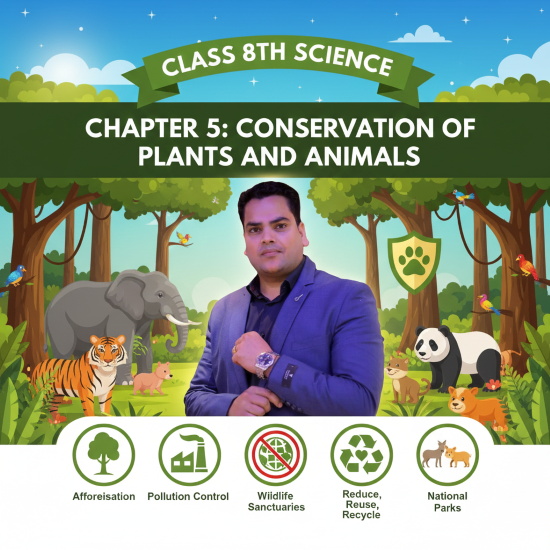
Chapter 5: Conservation of Plants and Animals
Chapter 5: Conservation of Plants and Animals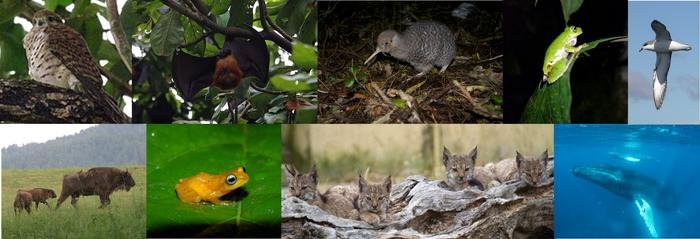
1. Introduction to Conservation of Plants and Animals
These notes of Conservation of Plants and Animals cover the entire chapter as per latest CBSE Class 8 NCERT textbook (2024–25). Use diagrams of biosphere reserve zones, food chain, and locations of national parks/sanctuaries in your notebook for better marks. Revise endangered animals list and difference between Sanctuary, National Park and Biosphere Reserve thoroughly — these are most commonly asked in exams.
- Earth has a huge variety of plants, animals and microorganisms → this variety is called Biodiversity.
- India is one of the 12 mega-biodiversity countries of the world.
- Biodiversity is important because:
- Plants give us oxygen, food, medicines, timber, fibres etc.
- Animals maintain ecological balance (food chain, pollination, seed dispersal).
- Microorganisms help in decomposition, nitrogen fixation, making curd, bread etc.
2. Deforestation and Its Causes
Deforestation = Large-scale cutting of forests.
Causes of deforestation:
- Procuring land for agriculture and housing
- Setting up industries
- Obtaining wood for timber and fuel
- Making roads, railways, dams, mining
- Forest fires (natural or man-made)
- Overgrazing by cattle
3. Consequences of Deforestation
- Drought → Less rainfall because trees help in cloud formation.
- Soil erosion → Topsoil is washed away → desertification.
- Global warming → Increase in CO₂ level → greenhouse effect.
- Loss of biodiversity → Many species become extinct.
- Disturbance in water cycle → Less transpiration → less rain.
- Floods → No trees to hold soil and absorb water.
- Loss of livelihood for forest-dependent communities.
4. Conservation of Plants and Animals
Conservation = Protection and wise management of natural resources so that future generations can also enjoy them.
5. Flora and Fauna
- Flora → All plant life in a particular area.
- Fauna → All animal life in a particular area. Example: Rajasthan → Cactus (flora), Camel (fauna); Kerala → Coconut trees (flora), Elephant (fauna).
6. Endemic Species
Species found only in a particular area and nowhere else in the world are called endemic species. Examples:
- Lion-tailed macaque → Western Ghats
- Sangai deer → Manipur
- Wild ass → Rann of Kutch
- Kashmir stag (Hangul) → Kashmir
Endemic species are more prone to extinction because their habitat is limited.
7. Wildlife Sanctuary
- Areas where animals are protected from hunting, poaching and disturbance.
- Human activities like collection of firewood, timber etc. are allowed to some extent allowed. Examples: Mudumalai (Tamil Nadu), Kaziranga (Assam), Periyar (Kerala).
8. National Park
- Areas reserved for wildlife where animals live in natural surroundings.
- No human activity is allowed (no grazing, cultivation, firewood collection etc.).
- Gives stricter protection than sanctuary. Examples: Jim Corbett (Uttarakhand), Kanha (Madhya Pradesh), Gir (Gujarat).
9. Biosphere Reserve
- Large protected areas meant for conservation of biodiversity (plants, animals and microorganisms) along with tribal culture.
- It has three zones:
- Core zone → No human activity.
- Buffer zone → Limited human activity.
- Manipulation/Transition zone → Settlement, cropping, recreation allowed.
- India has 18 biosphere reserves. Examples: Nilgiri, Nanda Devi, Sunderbans, Great Nicobar, Pachmarhi.
10. Endangered and Extinct Species
- Extinct species: Species that no longer exist on earth. Examples: Dodo, Passenger pigeon, Dinosaur, Pink-headed duck, Cheetah (in India).
- Endangered species: Species whose numbers are very low and may become extinct soon if not protected. Examples: Tiger, Snow leopard, Rhino, Asiatic lion, Black buck, Gangetic dolphin, Red panda.
- Vulnerable species: Likely to move into endangered category if threats continue.
- Rare species: Very few in number but not endangered yet endangered.
11. Red Data Book
- A book maintained by IUCN (International Union for Conservation of Nature) that contains list of all endangered plants and animals.
- It helps in planning conservation strategies.
12. Ecosystem and Food Chain
- All plants, animals and microorganisms in an area together with non-living components form an ecosystem.
- A series of organisms feeding on one another is called food chain.
- Deforestation breaks food chains and destroys ecosystems.
13. Migration
- Seasonal movement of animals from one place to another for food, breeding or climate is called migration. Example: Siberian crane comes to India (Bharatpur, Rajasthan) in winter.
14. Recycling of Paper
- One tonne of paper needs about 17 full-grown trees.
- Recycling 1 tonne of paper saves 17 trees, 26,000 litres of water, 4000 kW electricity and reduces pollution.
- Steps to save paper:
- Use both sides of paper
- Reuse notebooks
- Recycle old newspapers and notebooks
15. Reforestation
- Restoring destroyed forests by planting new trees is called reforestation.
- It can be natural (seeds already present in soil grow) or artificial (by man).
- Helps in preventing soil erosion, maintaining water cycle and reducing CO₂.
16. Protected Areas in India (Quick List)
- National Parks: 106 (as of 2024–25)
- Wildlife Sanctuaries: 573
- Biosphere Reserves: 18
- Project Tiger: Started in 1973 by Govt. of India. Tiger population has increased from 268 in 1972 to around 3167 (2022 census).
- Project Elephant: Started in 1992.
17. Important Points to Remember
- Deforestation → Desertification → Drought → Global warming → Loss of biodiversity → Extinction.
- We should not disturb natural habitats of animals.
- Hunting and poaching are banned under Wildlife Protection Act, 1972.
- Ecotourism: Responsible tourism that helps in conservation and provides income to local people.
18. Key Definitions
- Species: Group of organisms that can interbreed to produce fertile offspring.
- Biodiversity hotspot: Area rich in species diversity but threatened.
- Refugee species: Animals that move to protected areas when natural habitat is destroyed.
- Reserved forest: Forests with highest degree of protection.
- Protected forest: Some human activities allowed under control.
Download pdf notes and Sulutions of the Chapter:
Please Visit Readspot for Hindi Medium Study Material

You may also like

Chapter 1: Crop Production and Management

Chapter 2: Microorganisms Friend and Foe