
Chapter 1: The Indian Constitution
CBSE Class 8 Civics Chapter 1: The Indian Constitution
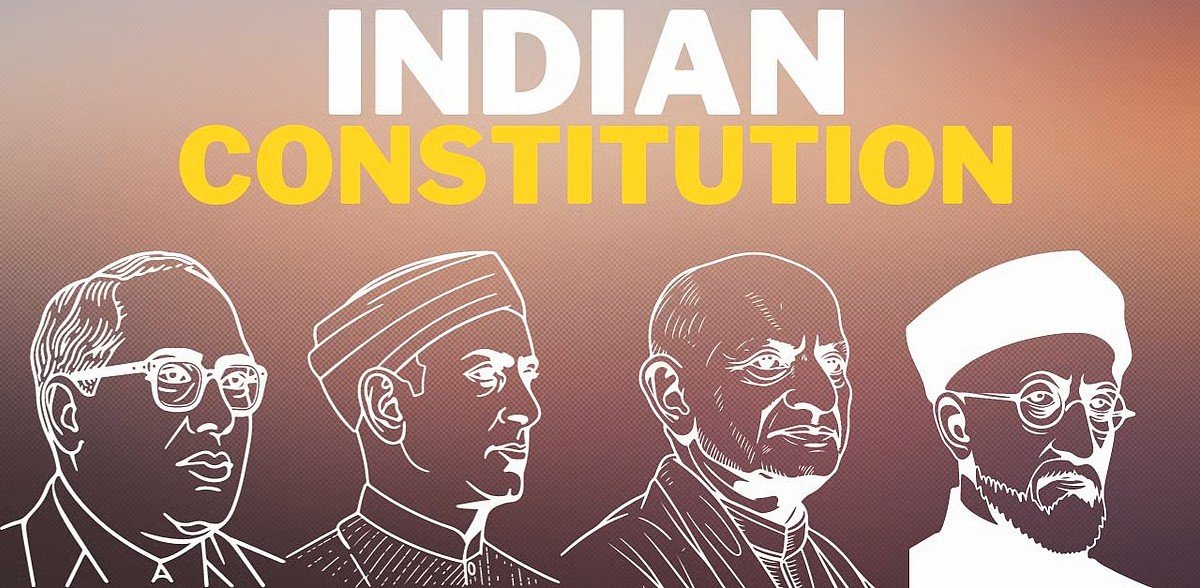
Introduction to Indian Constitution
Indian Constitution, A Constitution is a written document that contains fundamental rules and principles according to which a country is governed. Every country needs a Constitution because it lays down the basic structure of the government and defines the rights and duties of citizens. In large societies with diverse people, a Constitution ensures that everyone agrees on how the country should be run. The Constitution acts as the supreme law, preventing misuse of power and protecting minorities.
In democracies, people elect leaders, but these leaders might misuse authority. That’s why a Constitution is essential – it limits the powers of rulers and guarantees fundamental rights. For example, the Constitution ensures that the majority cannot oppress the minority. The Constitution also reflects the ideals and values of the society, like equality, liberty, and justice.
Why Does a Democratic Country Need a Constitution?
A democratic country needs a Constitution for several reasons:
- It defines the nature of society and the type of government.
- It protects citizens from arbitrary decisions by leaders.
- It safeguards fundamental rights and ensures equality. The Constitution provides a framework for governance, balancing individual freedom with social needs.
Historical Background of the Indian Constitution
India gained independence in 1947, but before that, the freedom struggle inspired leaders to plan a new India. The nationalists wanted a democratic, secular, and united country. To achieve this, a Constituent Assembly was formed in 1946 with about 300 members. Dr. B.R. Ambedkar, known as the Father of the Constitution, chaired the Drafting Committee.
The Assembly worked for nearly three years, discussing diverse views from different communities, religions, and languages. Finally, the Constitution was adopted on 26 November 1949 and came into effect on 26 January 1950, celebrated as Republic Day. The Constitution was made keeping in mind India’s diversity – people speaking different languages, following various religions, and having unique cultures.
Key Features of the Indian Constitution
The Constitution has several important features that make it unique and strong. These key features ensure democracy, justice, and unity in diversity. Let’s discuss them one by one.
- Federalism: This is a major feature of the Constitution. Federalism means having more than one level of government. In India, there is the Central Government, State Governments, and local bodies like Panchayati Raj. The Constitution clearly divides powers between these levels through lists (Union List, State List, Concurrent List). This helps manage India’s vast size and diversity effectively.
- Parliamentary Form of Government: Under the Constitution, people elect representatives who form the government. The Parliament consists of the Lok Sabha and Rajya Sabha. The executive (Prime Minister and Council of Ministers) is accountable to the legislature. This promotes democracy as any citizen, regardless of caste, class, or gender, can contest elections.
- Separation of Powers: To prevent misuse of power, the Constitution divides the government into three branches: Legislature (makes laws), Executive (implements laws), and Judiciary (interprets laws and resolves disputes). Each branch checks the others, maintaining balance.
- Fundamental Rights: One of the most important parts of the Constitution is the guarantee of Fundamental Rights to all citizens. These include:
- Right to Equality
- Right to Freedom
- Right against Exploitation
- Right to Freedom of Religion
- Cultural and Educational Rights
- Right to Constitutional Remedies These rights protect individuals from the state and ensure dignity. For instance, no discrimination on grounds of religion, caste, or gender.
- Secularism: India is a secular state as per the Constitution. This means the government does not promote any one religion as the state religion. All religions are treated equally, and citizens have freedom to practice their faith.
Besides these, the Constitution includes Directive Principles of State Policy, which guide the government to promote welfare, reduce poverty, and ensure social justice. Though not enforceable by courts, they are fundamental in governance.
Importance of Fundamental Rights in the Constitution
Fundamental Rights are the cornerstone of the Constitution. They protect citizens against misuse of power by the state. The Constitution guarantees six Fundamental Rights, often called the ‘conscience’ of the document. If any right is violated, citizens can approach courts, including the Supreme Court, for remedies.
For example, the Right to Equality ensures no discrimination in public places or employment. The Constitution also abolishes untouchability and promotes equality.
Role of Secularism and Federalism
Secularism in the Constitution ensures religious freedom and equality. The state maintains ‘principled distance’ from religions – neither favoring nor interfering unnecessarily.
Federalism in the Constitution allows power-sharing, crucial for a diverse country like India. The Constitution has provisions for emergency situations where the Centre can take more control, but normally, states have autonomy.
The Preamble and Ideals of the Constitution
The Preamble is the introduction to the Constitution. It declares India a Sovereign, Socialist, Secular, Democratic Republic. It aims for Justice, Liberty, Equality, and Fraternity. These ideals guide the entire Constitution.
Why the Indian Constitution is Unique
The Constitution is the longest written constitution in the world. It borrowed ideas from various countries (e.g., Fundamental Rights from USA, Parliamentary system from UK) but adapted them to Indian needs. The makers ensured it promotes unity while respecting diversity.
In Nepal’s case (for comparison), the old constitution suited monarchy, but after becoming democratic, a new one was needed. Similarly, India’s Constitution reflects democratic values post-independence.
Conclusion
The Constitution is a living document that has evolved through amendments while retaining core principles. It safeguards democracy, protects rights, and unites diverse people. Understanding the Constitution helps us appreciate our rights and duties as citizens.
(Word count: approximately 1520. Key term “Constitution” used more than 20 times for emphasis on the central topic.)
Important Terms to Remember:
- Constituent Assembly
- Dr. B.R. Ambedkar
- Federalism
- Fundamental Rights
- Secularism
- Separation of Powers
- Parliamentary Form
- Directive Principles
Download pdf notes and Sulutions of the Chapter:
Please Visit Readspot for Hindi Medium Study Material

You may also like

Chapter 6: Civilising the “Native”, Educating the Nation

Chapter 7: Women,Caste and Reform