Chapter 6: Civilising the “Native”, Educating the Nation
Chapter 6: Civilising the “Native”, Educating the Nation
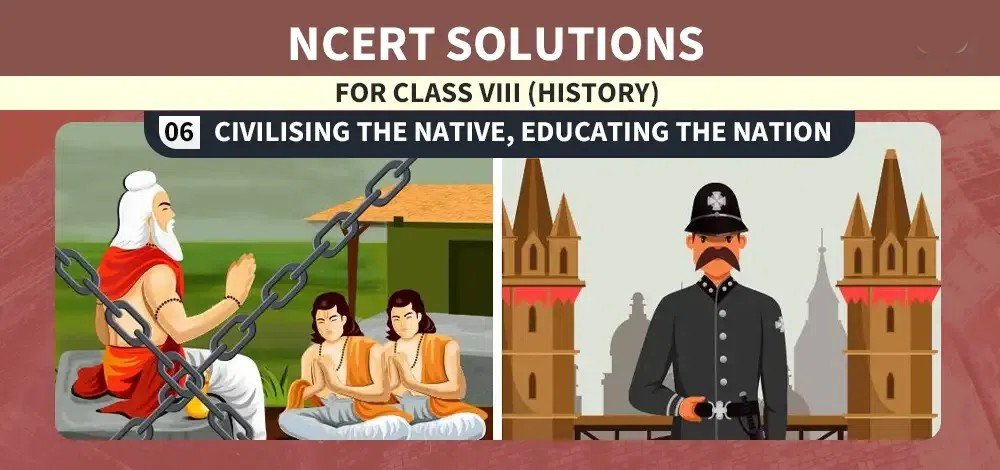
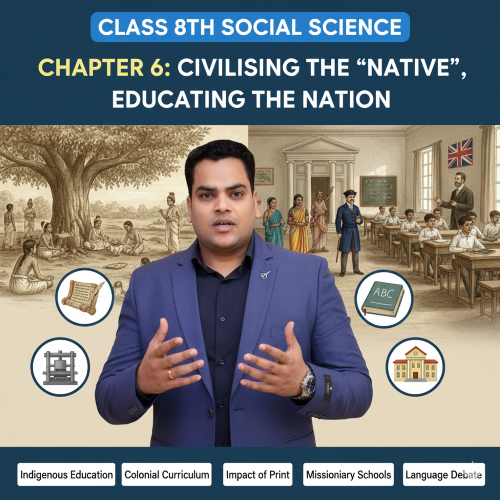
The chapter Civilising the “Native”, Educating the Nation explores how the British used education as a tool to control and transform Indian society during colonial rule. They believed in a “civilising mission” to make Indians “civilised” by imposing Western knowledge, language, and values. This process involved debates between Orientalists and Anglicists, changes in traditional Indian schools, and the rise of Indian ideas for Educating the Nation. The core theme is Educating the Nation through colonial policies and Indian responses.
1. How the British Saw Education
The British did not just want political and economic control; they had a cultural mission to civilise the natives. They viewed Indian society as backward and uncivilised. Education was seen as the best way to change Indian customs, values, and thinking.
- Orientalists’ View: Scholars like William Jones (a linguist and judge) and Henry Thomas Colebrooke respected ancient Indian culture. They believed Indian civilisation had great glory in the past (Sanskrit texts, Vedas, etc.) but had declined. They wanted to study and preserve Indian languages and texts. Institutions like Calcutta Madrasa (1781) and Benaras Sanskrit College (1791) were set up to promote Oriental learning.

- Anglicists’ View: Critics like James Mill and Thomas Babington Macaulay saw Indian knowledge as worthless. Macaulay called Indian literature inferior and said “a single shelf of a good European library was worth the whole native literature of India and Arabia.” He argued India was uncivilised and needed Western education to progress.

- Orientalist vs Anglicist Debate: Orientalists wanted traditional Indian learning, while Anglicists pushed for English and Western science. The debate ended with the victory of Anglicists.
The British aimed at Educating the Nation by making Indians learn English to serve as clerks and intermediaries.
2. Macaulay’s Minute and the English Education Act (1835)
In 1835, Thomas Babington Macaulay presented his famous Minute on Education. He argued that English should be the medium of instruction for higher education. He believed Indians should learn English to access Western science and literature. This would create a class of Indians “Indian in blood and colour, but English in taste, in opinions, in morals, and in intellect.”
- The English Education Act of 1835 was passed. It stopped funding for Oriental institutions and promoted English education. This marked a major shift in Educating the Nation.
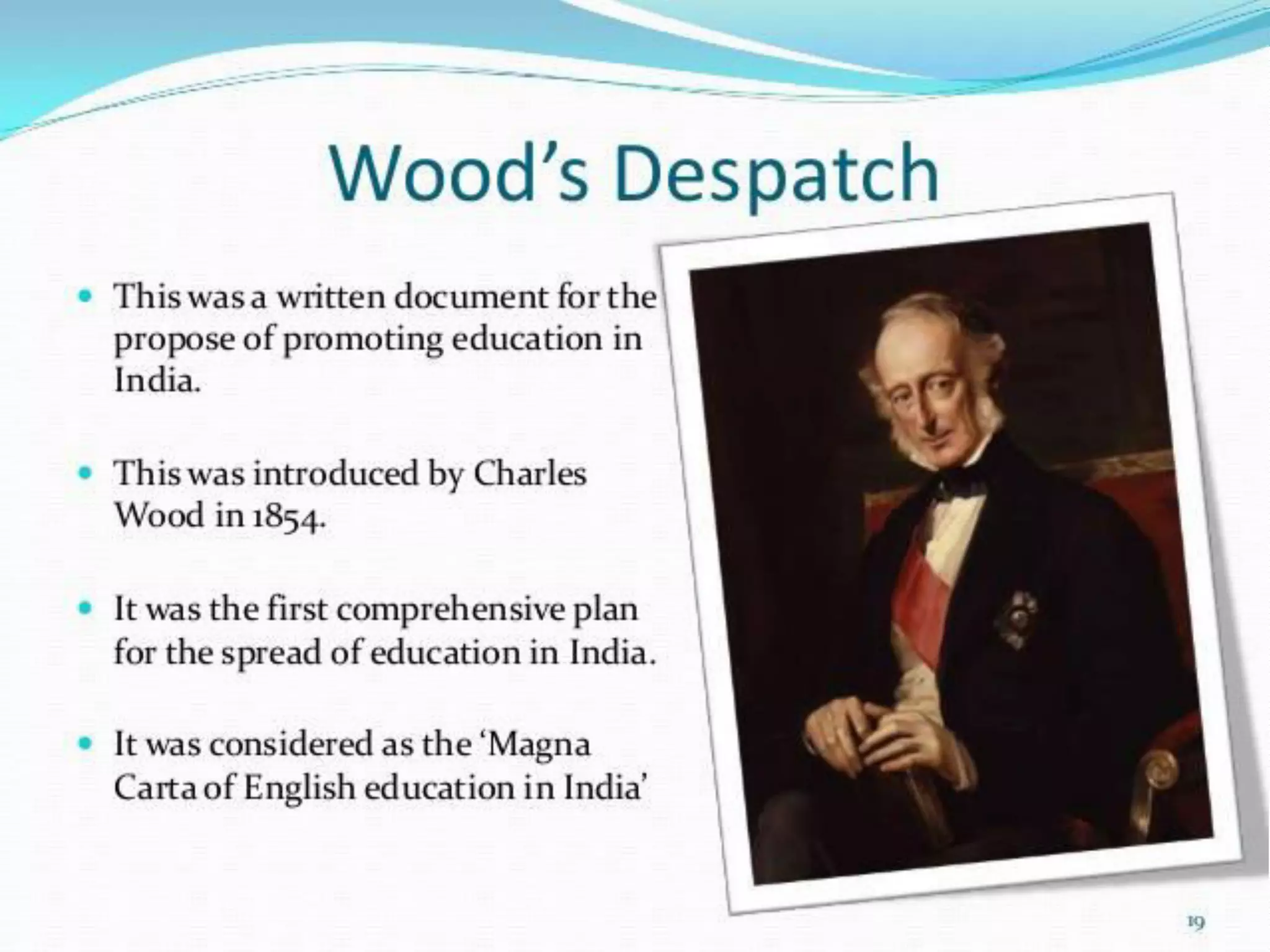
3. Wood’s Despatch (1854)
Known as the “Magna Carta of Indian Education”, Wood’s Despatch was sent by the British government in 1854. It outlined a complete system of education:
- English as the medium for higher education.
- Vernacular languages for primary education.
- Establishment of universities, grants-in-aid for schools, and teacher training.
- Focus on practical knowledge like science and technology.
This despatch helped spread Western education across India and laid the foundation for modern education.
 The British used education to civilise the natives and make them loyal to the empire.
4. What Happened to Local Schools (Pathshalas and Madrasas)?
Before British rule, India had a widespread traditional education system:
- Pathshalas (Hindu schools) taught reading, writing, and arithmetic in local languages.
- Madrasas (Muslim schools) taught Arabic, Persian, and Islamic texts.
- There were about 20 lakh students in these schools in the early 19th century. Schools were flexible – no fixed timetable, fees, or buildings. Teachers were respected and taught in community settings.
The British criticised this system as inefficient. They wanted regular classes, printed books, and trained teachers. They introduced new rules:
- Schools had to charge fixed fees.
- They had to follow a set curriculum.
- Grants were given only to schools teaching Western subjects.
Many traditional pathshalas and madrasas declined. The British aimed to replace them with a system that supported Educating the Nation according to their needs.
5. The Agenda for a National Education
Indian thinkers rejected the British system of Educating the Nation and proposed alternative ideas:
- Mahatma Gandhi’s Views:
- He criticised Western education for creating inferiority complex.
- It enslaved Indians by making them admire British culture and ignore their own.
- Gandhi wanted education in mother tongue, focused on practical skills, crafts, and moral values.
- He said English education distanced people from their society and made them clerks for the British.
- Rabindranath Tagore’s Views:
- Tagore wanted a blend of Western and Indian traditions.
- He founded Shantiniketan (Visva-Bharati) where students learned in open spaces, with art, music, nature, and science.
- He believed education should make children free and creative.
Both Gandhi and Tagore wanted Educating the Nation to preserve Indian identity while adopting useful Western ideas.
6. Role of Education in the National Movement
As the freedom struggle grew, Indians demanded Educating the Nation on their own terms. They boycotted British schools and set up national schools. The idea of Educating the Nation became part of the swadeshi movement. Leaders like Gandhi and Tagore inspired the youth to learn in a way that built national pride.
Key Points for Revision
- British civilising mission: Change Indian customs through education.
- Orientalists vs Anglicists: Respect for Indian culture vs promotion of English.
- Macaulay’s Minute (1835): English as medium of instruction.
- Wood’s Despatch (1854): Foundation of modern education system.
- Decline of pathshalas: Traditional schools replaced.
- Indian response: Gandhi – mother tongue and practical education; Tagore – creative and holistic learning.
- Educating the Nation was the ultimate goal of colonial policies and the Indian resistance.
Download pdf notes and Sulutions of the Chapter:
Please Visit Readspot for Hindi Medium Study Material

You may also like
Chapter 7: Women,Caste and Reform

Chapter 8: The Making of the National Movement